
Streaming On
Trailer
Soundtrack
| Song Name | Singer(s) | Lyricist | Video |
|---|---|---|---|
| Thanjavuru Maadathi | Jayamoorthy | Ve.Ramaswamy | |
| Thaila Thaila | Rita | Ve.Ramaswamy | |
| Senga Soola Kaara | Anitha Karthikeyan | Vairamuthu | |
| Aana Aavanna | Lisbon International Symphony Orchestra | Vairamuthu | |
| Poraney Poraney | Neha Bhasin and Ranjith | Karthik Netha | |
| Sara Sara Saara Kaathu | Chinmayi | Vairamuthu |
Storyline
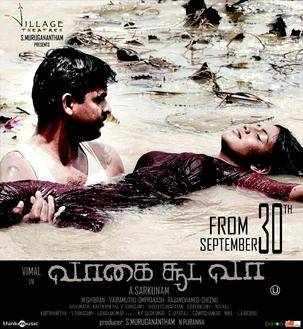
<p>The story is set in the 1960s. Veluthambi ( ) is a graduate aspiring for a government job. His father Annamalai ( ) advises him to work temporarily for an that helps in educating rural children so that he will be given a priority for a government job. Velu, although uninterested, joins the NGO and gets appointed as a teacher in a small dry village which lacks basic facilities. The entire village works for a rich landlord named JP ( ), who owns a brick factory. Velu tries to convince the villagers to send their kids to learn, but in vain. Madhiarasi ( ) owns a tea shop in the village with her brother (Dhashwanth) and falls in love with Velu. Also, the village kids play pranks on Velu, which irritates him. Velu understands that the villagers are exploited by JP, owing to their illiteracy by not paying them properly. Velu tries to make the villagers understand JP’s true colour, but they do not believe him as they see JP as their savior. Finally, the villagers understand that they are being cheated, and they demand proper payment for the bricks made by them. They also realize the value of education and send their kids to learn under Velu. Now, Velu gets a government job but turns down the offer as he prefers to continue working for the NGO, which gives him satisfaction. In a few days, he gets a letter from the NGO, stating that it is closing down due to financial difficulties. Velu worries as he is jobless and decides to work along with villagers in making bricks. The villagers come for the rescue and want him to continue as a teacher for their kids, and in turn, they agree to pay him. Velu also marries Madhi, and the movie ends with him feeling proud that the villagers understood the value of education. Shortly after the release of , which emerged a , Sarkunam had informed that he had “a couple of scripts in mind” and was discussing with his team on which they should work next, while stating that it “most probably” will not be set in a village again. He started working on his next project in late 2010, which he had titled as , roping in , who played the lead role in , for the lead character again. The film was revealed to be a , set in 1966, with Sarkunam describing it as a “romance drama sprinkled with humour”, while also stating it would convey a “much-needed” message. was Sarkunam’s first script and his “dream project”, which he had wanted to make his with, but he had to drop the idea, since no producer was willing to produce a period film with a newcomer in the lead role. He dismissed reports that the film was based on a Hollywood film and clarified that it was based on a scheme introduced by the Government in the sixties. Vimal was identified to play a young man named Veluthambi, who had finished his and aspires to become a teacher. The lead female role was that of a “tea tender” of the 1960s, a person working at a . Initially was signed up for the role, much before the release of her critically acclaimed . However, Amala, who following the release became much sought-after, was soon ousted from the project, since she started adjusting her dates as per her wishes and refused to take first, which Sarkunam did not agree with. She was replaced by a Malayali model-turned-actress Ineya, who had previously appeared in several Malayalam films and the 2011 Tamil film under her original name Shruthi. Ineya had been rejected at first, but was later approved by Sarkunam, when she visited his office during a Chennai trip and showed keen interest in the project and the role. Director-cum-actors and were signed to portray the fathers of the lead male and female characters, respectively, while would enact the ‘s role and would play a pivotal role as a “kuruvikaarar”. Contrary to what Sarkunam had initially planned, , too, was a story set in a village. Seenu, an assistant , took care of the art direction and erected a set of a village of 1 crore worth, near . The team had further conducted extensive historical research to create an authentic portrayal of the 1960s. Programmes that were aired on , which most people during that time were listening to, were imitated, with mimicry artists being roped in to reproduce the voices of the broadcasters of that time. released to mostly positive reviews from the critics. s reviewer called it a “thought provoking film which is beautiful, complete and laced with social consciousness”, further adding that it was a “bittersweet tale of human frailties, a small film with a very big heart and a subtle message”. A critic from gave the film 3.5 out of 5, labelling it a “simple tale, beautifully narrated on screen”, while citing that it was a “welcome trip back to the villages and to a time when success wasn’t defined by wealth alone”. Malathai Rangarajan from wrote that the film was not a “run-of-the-mill entertainer, yet it entertains”, summarizing it as “poignancy with an ample dose of healthy fun”. Anupama Subramanian from gave it 3 out of 5, citing that “though the pace suffers and in many places it gives you a docu-drama feel, Sargunam’s intention of making a movie different from the run-of-the mill kind should be lauded”. s reviewer wrote that the film was a “must-watch for those looking for a clean movie sans bloodshed, gory violence and obscene dialogues. The script, cinematography, art work and appreciable performances by the lead actors make it a compelling viewing”. The film’s score and soundtrack are scored by debutant , a friend of Sarkunam. marks the film debut for , who had been composing before. The soundtrack, which was released on 1 July 2011, features 6 songs, with lyrics penned by , and Ve. Ramasamy. had collaborated with the Lisbon International Symphony Orchestra for one of the songs. gave 4/5 for the music and stated “M Ghibran joins the list of debut composers who have impressed with their work in recent times. The music score complements the movie, and marks him out as a musician to watch out for.” from milliblog gave “A 200 for a debutant composer after a long time in Tamil!” and commented that “Vaagai Sooda Vaa’s soundtrack is a brilliant achievement – the music is refined and layered, something that is rarely expected out of a debut! Hats off, Ghibran!” Malathai Rangarajan from wrote that “Music is another highlight. M. Gibran’s numbers keep ringing in your ears long after you leave the cinema” Rajagopalan Badrinarayanan from musicperk.com wrote “‘Vaagai Sooda Vaa’ is a wholesome package with wonderful songs. Being his first movie Gibran has done a great job with the musical score. This movie has given him a great scope to prove his potential. The album will surely reshuffle the current chart”</p>
Details
🎬
Genres:
Drama
✍️
Writer:
Sarkunam
👤
Producer:
N. Purana Visvanathan (Malaysia)
🎵
Music:
Ghibran
🎬
Director:
A. Sarkunam
📸
Cinematography:
Om Prakash
📅
Release Date:
30-Sep-11
✂️
Edited By:
Raja Mohammad
💸
Budget:
🏭
Production Company:
📺
OTT Platform:
⏱️
Runtime:
2h 3m
🗣️
Language:
Tamil
💵
Box Office:
🌐
Other Languages:
📄
Screenplay:
🔒
Censorship:
Reviews
There are no reviews yet. Be the first one to write one.