
Streaming On

Movie Info
ℹ️ More Movie InfoTrailer
Storyline
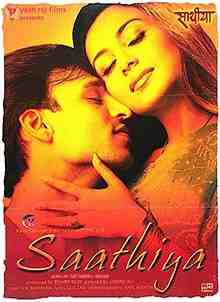
Aditya Sehgal, a young professional, is devastated when his wife, Suhani, goes missing following an argument over their faltering marriage. As he searches for her across , the narrative shifts into a tracing the evolution of their relationship. Aditya first meets Suhani at a wedding and is immediately smitten. Despite initial hesitation, Suhani gradually reciprocates his feelings. However, their romance is strained by socio-economic differences—Aditya hails from a wealthy business family, while Suhani belongs to a household. When their parents disapprove, particularly after Aditya’s father insults Suhani’s father, the couple elopes and secretly marries. Complications arise when Suhani reveals her marriage during a proposal for her elder sister, leading to her expulsion from her home. Simultaneously, Aditya’s parents discover the truth and disown him. Isolated from their families, the couple begins a modest life in a small apartment, struggling with the realities of marriage, career pressures, and domestic responsibilities. Tensions escalate after Suhani accuses Aditya of , resulting in a heated argument. Later that evening, Suhani is struck by a car while walking home, unbeknownst to Aditya. Believing she has left him in anger, he waits for her return. After realizing she is missing, Aditya begins a city-wide search. He eventually learns that Suhani has been admitted to a hospital under a different name and is in critical condition. The driver responsible for the accident, officer Yeshwant Rao, initially claims responsibility. However, his wife, Savitri, later reveals she was the actual driver, and Yeshwant had taken the blame to protect her. As Suhani regains consciousness, Aditya rushes to her side, confessing the anguish he endured during her absence. Suhani reciprocates, and the two reconcile, reaffirming their love for each other. was the directorial debut of and a Hindi remake of ’s Tamil film (2000). The film was jointly produced by Ratnam under and under . Ali collaborated with lyricist to adapt the screenplay and dialogues for a Hindi-speaking audience. was Shaad Ali’s original choice for the role of Aditya but declined the offer. The role was then given to , who had recently gained recognition for his debut in (2002). was cast as Suhani. Initially reluctant to take on the role due to her hesitation about remaking an acclaimed film, she eventually accepted after being persuaded by . Cinematography was handled by , while editing was done by . The film’s soundtrack was composed by , with lyrics by . Several songs, including “Saathiya†and “Chalka Chalka Re,†were filmed across urban and suburban locations in , with a focus on natural lighting and handheld camerawork to enhance realism. The soundtrack of was composed by , with lyrics by . It features nine songs, most of which were adapted from Rahman’s original compositions for ’s Tamil film (2000). Two tracks, “Mere Yaar Mila De†and “Naina Milaike,†were newly composed for the Hindi version, replacing “Evano Oruvan†and “Alaipayuthey,†respectively. Rahman experimented with a blend of influences and contemporary arrangements, incorporating , , and elements. The title track “Saathiya,†sung by , was particularly well-received and went on to win several awards. According to , the soundtrack was the second highest-selling Bollywood album of 2002, with approximately two million units sold—just behind . The music album was praised by music critics for its innovation and lyrical depth. of described the music as “melodious and easy on the ears,†naming the title track as the standout. commended the digital sound mix and visual presentation of the songs in the film, while highlighted “Chhalka Chhalka Re,†“Chupke Se,†and “Aye Udi Udi Udi†as musical highlights. wrote that Rahman created “a different genre of music†with a unique, upbeat sound that stood out among his contemporaries. At the , won (A. R. Rahman) and (Sonu Nigam for “Saathiyaâ€). All tracks are written by . emerged as a commercial success, earning approximately ₹291.5 million (US$3.4 million) worldwide. It ranked as the . In India, the film collected a net revenue of ₹152.55 million and a gross revenue of ₹247.1 million. The film had a strong opening, with a first-day collection of ₹5.3 million and a first-week total of ₹37.8 million. Internationally, grossed approximately $925,000 (₹45.2 million). In the United States and Canada, the film earned $312,660. received generally positive reviews from critics, with praise directed towards its performances, direction, music, and realistic portrayal of romantic relationships. Several reviewers, however, noted issues with pacing and narrative consistency. Writing for , described the film as “a gentle study of love and marital blues in urban India” and praised its realistic tone and spontaneity. He commended and for their “believable” performances, and highlighted the film’s technical merits, particularly ’s editing and ’s cinematography, which he called “wonderfully chiselled and lively.” of noted that the film’s simple narrative structure was effectively executed, avoiding unnecessary subplots. She appreciated director ’s focused storytelling and observed that the lead pair’s chemistry added emotional depth to the film. Manish Gajjar of the described the film as “a touching love story with a difference” and praised the lead performances, noting that “Oberoi shows great promise” and that Mukerji “plays the character with great conviction.” He also lauded ’s soundtrack as “melodious” and highlighted the film’s direction and emotional tone. In a review for , David Rooney called the film “a slick, emotionally satisfying romantic drama.” He praised the musical score by and described Mukerji’s performance as “expressive,” effectively capturing the transition from youthful romance to mature resilience. Rooney also cited the production values and cinematography as contributing to the film’s overall appeal. Udita Jhunjhunwala of commended Mukerji for her “understated” portrayal of Suhani, stating the role “fits her like a glove.” She criticized the first half for “choppy editing and rushed pacing,” and felt that the climax was “overly commercial,” but acknowledged the film’s emotional sincerity. of was more critical, rating the film 1.5 out of 5. He praised the soundtrack and cinematography but criticized the screenplay, stating that the second half “falls flat” and that the film “relies too heavily on its music to sustain interest.” The film received several accolades, including six , three , three and four is regarded as one of the more influential romantic dramas in Hindi cinema from the early 2000s. The film was noted for its realistic portrayal of post-marital conflict and for subverting conventional Bollywood tropes by not adhering to a traditional “happily ever after” narrative structure. The film marked a significant milestone in ’s early career, becoming his third box-office success in his debut year following and . It also played a pivotal role in establishing as a leading actress in Hindi cinema. Although she had experienced only moderate success prior to , her performance in the film was widely praised and is often cited as one of the most defining roles of her career. The song “Chalka Chalka Re,†adapted from the original Tamil track “Yaaro Yaarodi†from (2000), gained renewed visibility when the original version was featured in the 2008 English-language romantic comedy .
Details
Reviews
There are no reviews yet. Be the first one to write one.