
0.0
0.0 out of 5 stars (based on 0 reviews)
Excellent0%
Very good0%
Average0%
Poor0%
Terrible0%
Your Rating for
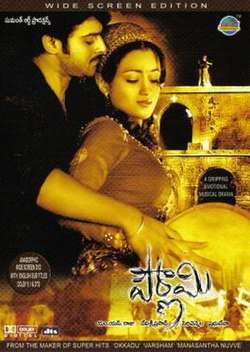
Pournami
Streaming On
Trailer
https://m.youtube.com/watch?v=T0aJJFtecAk&pp=ygUJI3ByYWJoYXN3
Soundtrack
Storyline
<p>In 1953, in a remote village in , Subramanyam teaches dance ( ) to his daughter, Pournami, as part of their family tradition. He recounts the story of a woman in 1507 who danced in the temple for seven days and nights to ask for rain during a devastating drought. The woman’s sacrifice brought rain, and since then, every twelve years, a girl from her lineage performs the ritual dance in the temple. Pournami’s mother performed this dance in 1951, and Pournami is expected to do the same. In 1963, as the festival approaches, Pournami mysteriously disappears, and the villagers assume she has eloped with someone. Attention then shifts to her younger sister, Chandrakala, but their father refuses to teach her the dance. Meanwhile, their stepmother rents out their penthouse and courtyard, where Pournami used to dance, to Siva Kesava, a western-style dance instructor. Pournami has not eloped, but her father sent her away to protect her from their , Veerabhadra, who wants to make Pournami his . Fearing that the same fate might befall Chandrakala, he declines to teach her how to dance. Kesava shows a necklace to Subramanyam, which shocks him, and then promises to protect her from the zamindar. At this, she begins her studies. As Chandrakala begins her dance training, she develops feelings for Kesava. However, Kesava reveals his past: he had married Pournami, who sacrificed herself to save his life. Before dying, she made Kesava promise that Chandrakala would perform the temple dance. After learning of her sister’s fate, Chandrakala agrees to continue the tradition with her father’s blessing. Chandrakala becomes a skilled dancer, and during the festival, she performs the ritual dance. As she completes the performance, the village is once again blessed with rain. Despite Veerabhadra’s interference and complications with Kesava’s former fiancée, Mallika, Kesava and Chandrakala get engaged. Years later, the couple has a daughter named Pournami, who does not want to learn the family dance. The film concludes with Kesava narrating the tradition to their daughter in the temple. The script for was inspired by a real-life incident that happened four decades before the film’s production, which , the director of (2004), shared with producer and writer . Raju developed the script with the intention of creating something different from regular films, drawing inspiration from like (2001) and (2001). The work on the script started from February 2005, and the film was launched on 22 August 2005. Set in the 1960s, Raju specifically chose this period for the film’s backdrop, believing it would offer a distinctive flavour to the narrative. Raju’s vision for aimed to blend Telugu culture and traditions with a commercially viable format. One of the flashback portions in the film was inspired by the 2001 Brazilian film , itself adapted from the 1978 Albanian novel by . , having previously worked with Raju in , was cast in the lead role. The female leads were portrayed by , , and . Before the film’s release, Raju acknowledged that casting Prabhas, primarily known for action roles, in a like was experimental. However, he believed the unique casting would result in something fresh and engaging. , one of the film’s writers, noted that Prabhas’ character was symbolically influenced by both and , as represented by the snake and flute in his characterization. was Prabhu Deva’s second directorial venture following his success with (2005). While the script was developed by Raju, Prabhu Deva played a significant role in the film’s execution. Production of spanned approximately eight months, involving around 180-190 working days. The film was shot at key historical locations such as the , elephant stables, and Stepwell in , adding an authentic period aesthetic to the film. The music and background score was composed by , and the lyrics were written by . The track “Bharata Vedamuga” was set in the raaga. The audio was released at Film Nagar Daiva Sannidhanam, Hyderabad on 22 March 2006. Jeevi of rated the film three out of five and noted, “Producer MS Raju should be appreciated to make a film that has classical dance and traditions as backdrop. Climax should have been better. The thread of main villain Rahul Dev is left incomplete.” A critic from wrote, “on the whole, this isn’t something that is worth the 3 hours it demands.” Ashok won the 2006 for his work on .</p>
Details
🎬
Genres:
Drama
✍️
Writer:
M. S. Raju
👤
Producer:
M. S. Raju
🎵
Music:
🎬
Director:
Prabhu Deva
📸
Cinematography:
Venu
👥
Starring:
Prabhas, Trisha, Charmy, Sindhu Tolani
📅
Release Date:
20-Apr-06
✂️
Edited By:
K. V. Krishna Reddy
💸
Budget:
🏭
Production Company:
📺
OTT Platform:
⏱️
Runtime:
🗣️
Language:
Telugu
💵
Box Office:
🌐
Other Languages:
📄
Screenplay:
🔒
Censorship:
Reviews
There are no reviews yet. Be the first one to write one.