

Trailer
Soundtrack
Storyline
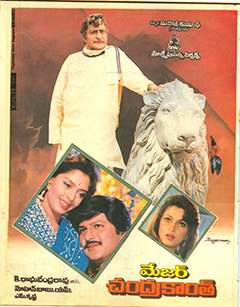
<p>Mohan is a tailor who lives with his younger sister Vimala. Orphaned at an early age, Mohan goes through a life of hardship and fulfills all his sister’s wishes. Rajinikanth, a , lures Vimala and cheats on her. Unable to face her brother, she commits suicide. Mohan confronts Rajinikanth and kills him in revenge. Now a fugitive, Mohan hides in the house of Chandrakanth, a retired and blind Mohan is amused and fascinated by Chandrakanth’s virtues and how he manages to live though he is blind. Mohan reveals why he is on the run from the law and ironically, the deceased happens to be Chandrakanth’s younger son. Chandrakanth feels humiliated for nurturing Rajinikanth and is sorry for Mohan’s plight. Ultimately, Chandrakanth’s elder son Srikanth, an inspector, arrests Mohan along with his father for showing hospitality to a criminal. In October 1963, it was announced that had sold the film rights of his play ; the film adaptation would be directed by for Nithyakalyani Films, and star , but was later shelved. Instead, the play was adapted into a film in 1965, with a different cast and crew. later decided to produce a Tamil film adaptation of the play under his banner with the same title, and Balachander was chosen as director, as it was Meiyappan’s long-time desire that Balachander make a film for AVM. , who portrayed the blind major Chandrakanth in the Tamil play, reprised his role in this film. The character’s sons Srikanth and Rajinikanth were played by and respectively, replacing and Govindarajan. was cast as Vimala, unlike the play where the same character was . The film was the only collaboration between her and Balachander. was cast as Vimala’s brother Mohan, replacing Gokulnath. The role was a departure from the comedic roles he was then generally known for. Cinematography was handled by , the art direction by A. K. Sekhar, and the editing by R. G. Gopu. Meiyappan’s sons Murugan, Kumaran and were assistant producers. The final length measured 4,425 metres (14,518Â ft). The music was composed by . The song “Kalyana Sapadu Podava” is set in the known as . The song “Oru Naal Yaaro”, picturised on Mohan going to prove to the audience in his neighbourhood that his Vimala is singing on the radio, became a chartbuster. was released on 11 November 1966, during . In a review dated 26 November 1966, said Sundarrajan brought not only “complete conviction and dignity” to his role but also “revels his rare characterisational depth and sensitivity.” The reviewer also praised the performances of Nagesh, Jayalalithaa, Muthuraman and Rajan, the photography and the editing. A critic from praised the performances of the cast, particularly Sundarrajan, but felt the film looked like a play in many places. The film won two Chennai Film Fans’ Association Awards: Best Film, and Best Supporting Actor (Muthuraman). Following the film’s commercial success, Sundarrajan became popularly known with the prefix “Major”. During the making of (1975), Balachander rechristened newcomer Shivaji Rao Gaekwad as , named after A. V. M. Rajan’s character, and Rajinikanth went on to become one of the most successful of Tamil cinema.</p>
Details
🎬
Genres:
Drama
✍️
Writer:
K. Balachander
👤
Producer:
A. V. Meiyappan
🎵
Music:
V. Kumar
🎬
Director:
K. Balachander
📸
Cinematography:
S. Maruti Rao
👥
Starring:
Major Sundarrajan, Nagesh, R. Muthuraman, A. V. M. Rajan, Jayalalithaa
📅
Release Date:
11-Nov-66
✂️
Edited By:
R. G. Gopu
💸
Budget:
🏭
Production Company:
📺
OTT Platform:
SunNXT
⏱️
Runtime:
2h 43m
🗣️
Language:
Tamil
💵
Box Office:
🌐
Other Languages:
📄
Screenplay:
🔒
Censorship:
Reviews
There are no reviews yet. Be the first one to write one.