
Streaming On
Trailer
https://www.youtube.com/watch?v=-JfCLMEt0y4
Soundtrack
Storyline
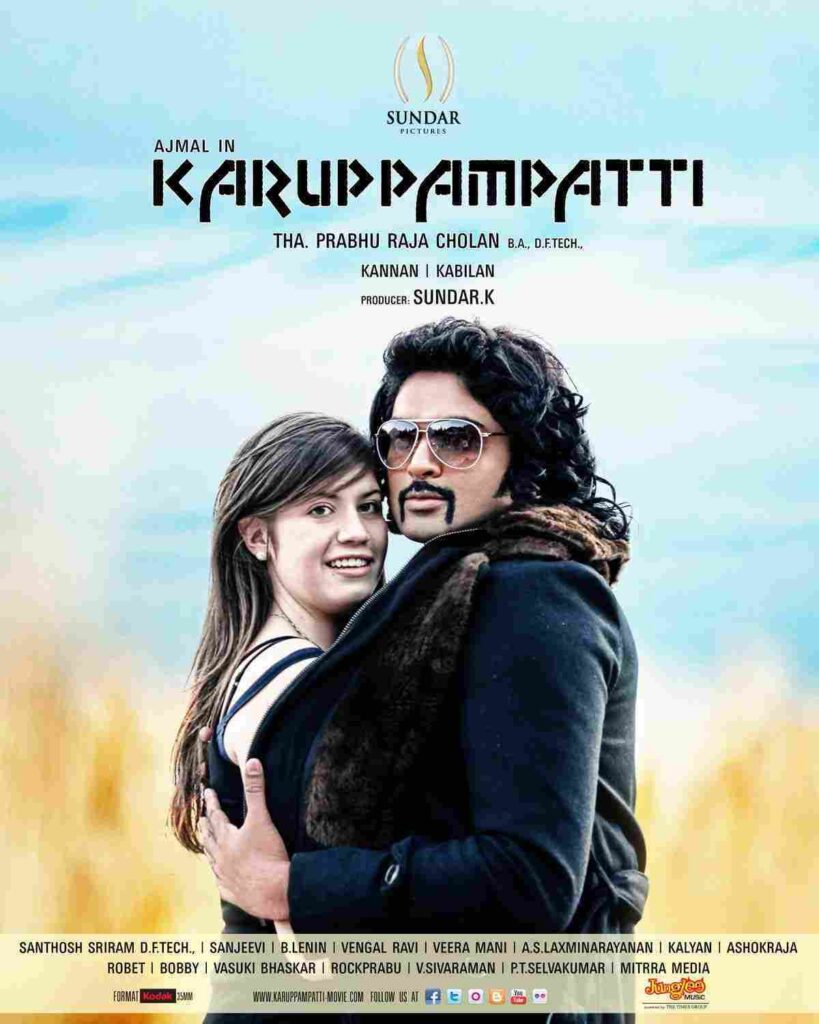
<p>The story begins in the small, traditional village of Karuppampatti near , where Kothai ( ) lives a simple life bound by the customs and expectations of rural Tamil Nadu. The film portrays the village not through the typical romanticized lens often seen in Tamil cinema, but as a place where conservative mindsets and social prejudices can flourish alongside genuine community bonds. Kothai, an ambitious young man with dreams beyond the village boundaries, finds himself increasingly at odds with the limited opportunities and rigid social structures of his hometown. Driven by his desire for education and a better life, Kothai makes the life-changing decision to leave Karuppampatti and pursue his studies abroad. His journey takes him across continents to Paris, France, where he enrolls in a university and experiences a profound culture shock. The bustling cosmopolitan city, with its liberal values, diverse population, and modern lifestyle, presents a stark contrast to everything Kothai has known. In Paris, Kothai’s life takes a romantic turn when he meets Shanthini, also known as Kaveri ( ), a woman who becomes instrumental in his personal transformation. Their relationship develops against the backdrop of iconic Parisian locations, including scenes shot near the Eiffel Tower. Through Shanthini, Kothai learns to navigate the complexities of modern relationships and begins to question many of the traditional beliefs and practices he grew up with. The narrative structure employs flashbacks and parallel storytelling to contrast Kothai’s current life in Paris with his memories of Karuppampatti. As the story unfolds, it’s revealed that Kothai plays a dual role, portraying both father and son across different time periods, highlighting how patterns of migration, ambition, and cultural conflict repeat across generations. This storytelling technique allows the film to explore themes of legacy, inherited dreams, and the cyclical nature of social change. Back in Karuppampatti, the supporting characters represent different aspects of village life and varying attitudes toward progress and tradition. Don Stanlee ( ) embodies a certain worldliness within the rural setting, while Karuppu ( ) and Anglee ( ) represent the more conventional village perspectives. Sivagami ( ) and Meenakshi ( ) provide the female viewpoint on the social dynamics, setting up the feminist themes that become prominent in the film’s climax. The story also incorporates Kothai’s academic journey, showing him in university classrooms and libraries, struggling with coursework while grappling with homesickness. His determination to succeed academically becomes intertwined with his emotional growth, as he learns to balance respect for his origins with the need to embrace new ideas and perspectives. As the narrative progresses toward its climax, tensions between traditional and modern values reach a breaking point. The film’s most significant moment comes with what critics described as a “mild feminist uprising,” where the female characters challenge established patriarchal norms and demand recognition of their agency and rights. This rebellion serves as a catalyst for broader social change within the community, suggesting that progress often comes from unexpected quarters and that women can be powerful agents of transformation in conservative societies. The resolution sees Kothai having to make crucial decisions about his future – whether to remain in Paris and fully embrace his new life, or return to Karuppampatti and attempt to bridge the gap between his two worlds. In February 2010, Tha. Prabhu Raja Cholan, a former associate of director , announced that he would make a titled , which would be produced by Sundar K it would have cinematography by P. G. Muthaiah and music by . However, before production, the team was changed and it was announced that Santhosh Sriram would be the cinematographer and Kannan of fame would be the music composer. The producer of the film approached Hindi actress to play the lead role in the film, but were unsuccessful in convincing her to debut in Tamil films with this venture. Hence , who had made her debut in ‘s , was signed on to play the leading female role in the film. The shooting of the film began in May 2010 and posters featuring Ajmal with the backdrop of the in Paris, walking in snow, and studying in a university classroom abroad were released. It was also reported that Ajmal plays a dual role as father and son and that the film will be set in two backdrops that of a village and the city, with the director remarking the film would show a person’s journey through life from village near to , . A song titled “Oh Indira” was shot with Ajmal and Archana in May 2010 at AVM Studios, Chennai with a 1970s bar set out up. The team shot a schedule in in December 2010 and then returned in August 2011, when Ajmal refused to engage in a scene where there is a kiss sequence with Aparnaa Bajpai and eventually ended up kissing her on the cheek instead. The final portions of the film were canned in , and in and , in February 2012 where scenes featuring Ajmal and Italian model Alice Tantardini were canned. In April 2012, it was announced that would sing a song for the film titled “Naughty Raja Raja” and the team audaciously attempted to bring in international pop star to feature in the music video. To make most of use of Ajmal’s popularity in Tamil, Telugu and Malayalam film industries, the director confirmed that the film would be dubbed and released in the latter two languages. Ajmal also completed his dubbing for the film in French after taking lessons in the language to ensure his voice remains constant in the film. rated the film 2.5 out of 5 and wrote Karuppampatti is a decent attempt and doesn’t live up to its expectations because of its half-baked script about portraying family melodrama. Further adding that the screenplay lacked the much needed depth to convey the emotional bonding and the newbie director failed in detailing and his lazy execution only adds to its woes. of the Hindu wrote “Karuppampatti is a rarity in the current Tamil-cinema milieu — it tells us that villagers can be self-centred and intolerant. (In other words, they don’t have to migrate to a big, bad city and then become self-centred and intolerant, their innocence squelched under the callous city-dwellers’ feet.) Rarer still is the (mild) feminist uprising during the climactic stretch.” The soundtrack of the film was composed by , while lyrics were written by . The songs released on 3 July 2012.</p>
Details
🎬
Genres:
Drama
✍️
Writer:
Tha. Prabhu Raja Cholan
👤
Producer:
Sundar K
🎵
Music:
Kannan
🎬
Director:
Tha. Prabhu Raja Cholan
📸
Cinematography:
Santhosh Sriram, Sanjeevi Sathyaseelan
👥
Starring:
Ajmal Ameer, Aparnaa Bajpai
📅
Release Date:
22-Mar-13
✂️
Edited By:
B. Lenin
💸
Budget:
🏭
Production Company:
📺
OTT Platform:
⏱️
Runtime:
🗣️
Language:
Tamil
💵
Box Office:
🌐
Other Languages:
📄
Screenplay:
🔒
Censorship:
Reviews
There are no reviews yet. Be the first one to write one.