
Streaming On
Trailer
https://www.youtube.com/watch?v=4ArOxUQHixw&pp=0gcJCfwAo7VqN5tD
Soundtrack
Storyline
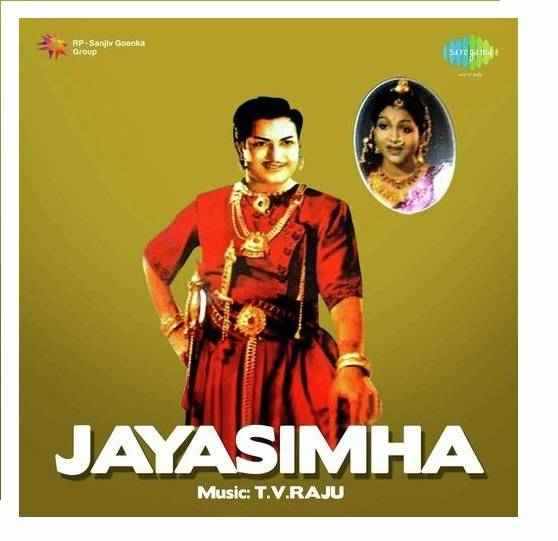
<p>The film begins in the Malwa kingdom, whose ruler Amarasimha, while ailing, entrusts Prince Jayasimha’s liability to his sibling Rudrasimha & his benevolent wife, Durgadevi. However, the spiteful Rudrasimha always urges for the throne. Durgadevi raises Jayasimha under the light of love with her son Vijayasimha, who is devoted to his brother. Years pass, Jay & Vijay turn into gallants, and it is time to crown him. It begrudges Rudrasimha, who ruses to assassinate Jayasimha. Being conscious of it, Jayasimha silently quits the Kingdom, surrendering it to his uncle. Yet, Rudrasimha commissions his henchman Chandrasena, determining that no enemy should be left. Vijay learns of his father’s plot and walks to shield his brother. Meanwhile, in the forest of the Magadha kingdom, Jayasimha secures Princess Padmini from the dacoits when they crush. He is introduced as Bhavani Prasad and moves into their Kingdom. Therein, an old disabled general, Ranadheer, shelters him and befriends his son Budhimathi, & daughter Kalindi. Currently, their country is facing a gigantic battle with bandits’ rebellion, who captured Emperor Raghuveer. Jayasimha proceeds to the fortress; with the aid of Padmini, he enrolls in the army and safeguards the King. Ergo, he has given with the great honor of a satrap. Here, the commander-in-chief, Mahaveer, is enraged at Jayasimha’s big hit and Pamini’s endearment towards him. Parallelly, Kalindi also falls for Jayasimha and, thus, creates a rift between him & Padmini to win her love. Later, she regrets that Jayasimha considers her a sibling. Chandrasena then tracks down Jayasimha’s whereabouts, who mingles with Mahaveer and abducts him with Padmini. Kalindi follows the duo and safeguards them by sacrificing her life. Besides, Mahaveer forcibly conspires to knit Padmini when Jayasimha assaults him. Unfortunately, the miscreants capture Jaya Simha when a man with a veil protects them, and Jayasimha kills Mahaveer. Now, Rudrasimha is about to onset on Magadha when Durgadevi bars him, but he deafens his ears by shooting her down. Jayasimha alone enters the battlefield and bows his head before his uncle. On the verge of Rudrasimha slaying him, the man in the veil stabs him. As a flabbergast, he uncovers him as Vijayasimha. At last, remorseful Rudrasimha pleads pardon from Jay & Vijay. Finally, the movie ends happily with Jayasimha’s crowing ceremony. After shooting the song, “Jaya Jaya Sri Rama”, I removed the makeup and sat next to [Rama Rao]. Anjali Devi asked [him] “who is this boy?” [Rama Rao] had a hearty laugh and replied, “Till now he is the one who acted as your father.” [ ] I can never forget the surprised expression on Anjali Devi’s face. As an actor it was the most memorable moment in my life. was depressed because of the commercial failure of his previous film (1954), which he produced along with his brother and Atluri Pundarikakshayya. The failure prompted Rama Rao to contemplate quitting film production, until Trivikrama Rao and Pundarikakshayya convinced him to try making a rooted in folklore. The financial success of (1951), (1953) and (1954)—all starring Rama Rao in the lead role and set in the same genre—further influenced their decision. Most of the principal crew of , including its director and writer , were retained for this film. Rama Rao advised Samudrala Jr. to loosely adapt the novel . However, the same was not acknowledged in the film’s credits. The film was titled and was produced for Rama Rao’s production company National Art Theatre. While Rama Rao decided to play the eponymous protagonist, and were cast as the female leads Kalindi and Padmini respectively. was Waheeda’s debut as an actress, after her appearances in (1954) and (1955); she was trained by Pundarikakshayya himself and her lines were dubbed by . For the role of Vijayasimha, Jayasimha’s brother, the makers approached who could not accept the offer because of scheduling conflicts. was considered, but (who was cast as Ranadheer, Kalindi’s father) recommended for the role. Rama Rao agreed, and this was Kanta Rao’s second collaboration with the former after (1954). , and were cast in key supporting roles. Anjali Devi was given the top billing in the film’s opening credits and the song books, and was succeeded by Rama Rao and Ranga Rao. , who assisted Rama Rao during the production of (1953) and , joined the film’s crew as an associate producer. M. A. Rehman was signed as the cinematographer and G. D. Joshi edited the film. was shot in sets erected by Thota at , Madras (now ). commenced on 19 January 1955 with a sequence filmed on Rama Rao and Relangi at Vauhini Studios, Madras. ‘Stunt’ Somu choreographed the action sequences. Kuchala Kumari and Rita composed the choreography for the dance sequences. The activities were carried out at Vijaya Laboratories in Madras. composed the film’s soundtrack and score, with lyrics written by Samudrala Jr., which was marketed by . , who was known as ‘Dholak’ Satyam back then, assisted Raju during the composition of the songs. A. Krishnan was the film’s audiographer, assisted by A. R. Swaminathan, C. Radhababu and V. Govinda Rao. On Satyam’s advice, Raju decided to look for inspiration in . For the song “Eenati Eehayi”, Raju took inspiration from composition “Zindagi Denewale Sun” for (1953). Similarly, for the of the song “Manasaina Cheli Pilupu”, Raju used the tune of “Chori Chori Aag Se” composed by Shyam Sundar for (1951). Raju deviated from the tune of the originals, however, while composing the for these songs. Another song “Are Nee Sagamapa” was adapted from a Hindi language composition of the same name written by for (1950). The song “Nadireyi Gadichene”, filmed on Waheeda, was composed as a using the Begada raga. The duet “Madiloni Madhurabhavam”, filmed on Rama Rao and Waheeda, was composed using the raga. Raju composed the song “Nadiyeti Painadachu” in a format which was well received by the critics. The soundtrack, consisting of 12 songs, was released on 31 December 1955 and received positive reviews. The song “Jaya Jaya Sri Rama” particularly gained popularity during the film’s release and was played regularly in temples dedicated to in Andhra Pradesh. All lyrics are written by . was released theatrically on 21 October 1955, cashing in on the festival holidays. National Art Theatre released the film on their own across Andhra Pradesh, while the distribution rights for Nizam, Ceeded and Mysore regions were acquired by All India Talkie Distributors. Upon release, the film was a commercial success, completing a 100-day run in 6 centres, 169-day run in Vijayawada and Guntur, and a 175-day run in Bangalore. was later dubbed into Tamil the same year with the title .</p>
Details
✍️
Writer:
Samudrala Jr
👤
Producer:
N. Trivikrama Rao
🎵
Music:
🎬
Director:
T. V. Raju
📸
Cinematography:
M. A. Rehman
👥
Starring:
N. T. Rama Rao, Anjali Devi, S. V. Ranga Rao, Waheeda Rehman
📅
Release Date:
21-Oct-55
✂️
Edited By:
G. D. Joshi
💸
Budget:
🏭
Production Company:
National Art Theatre
📺
OTT Platform:
⏱️
Runtime:
🗣️
Language:
Telugu
💵
Box Office:
🌐
Other Languages:
📄
Screenplay:
🔒
Censorship:
Reviews
There are no reviews yet. Be the first one to write one.