
Streaming On

Movie Info
ℹ️ More Movie InfoTrailer
Storyline
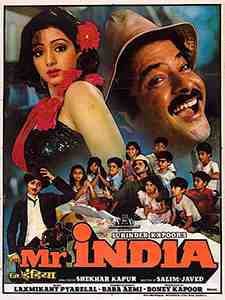
Mogambo is a criminal whose goal is to conquer India. From his hidden island, he monitors all the evil-doings perpetrated by his henchmen. Catchphrases like “Mogambo khush hua” and “Hail Mogambo!” used by his subordinates, show his complete authority over his minions. Arun Verma is a street violinist and philanthropist who rents an old house to take care of ten orphans with the help of his cook named “Calendar”. Arun is seldom able to make ends meet and is in deep debt, so he decides to rent out the room on the first floor. Seema Soni, his first tenant, is a local journalist who eventually becomes friends with everyone. Arun falls in love with her. Arun receives a mysterious letter from a family friend, Professor Sinha, which reveals that Arun’s late father—a renowned scientist—had created a that would make its user invisible. It still needed to be patented, and because Arun was the only son, it was his responsibility to complete the protocol and sign the paperwork. Arun sees this as an opportunity. With the directions in the letter, and accompanied by his ward, Arun enters his father’s old laboratory. When the device is activated, it makes the wearer invisible unless red light is focused on the wearer. Arun decides to keep this a secret. After a few months as a tenant, Seema is invited to a lavish party hosted by an acquaintance, and she performs a song under the guise of a famous Hawaiian dancer, who is unable to make it to the party. After the performance, she is nearly killed by criminals who think she is a spy, but Arun comes to her rescue, styling himself as an invisible person and introducing himself to them as “Mr. India”. Seema subsequently falls for her rescuer. However, Arun keeps his identity as Mr. India secret for a few more months. One day, Arun uses the device to trick one of Mogambo’s henchmen to foil his criminal plans; Mogambo’s minion reports the incident to his boss. Thereafter, Mogambo has bombs disguised as toys planted in public places. Tina—one of the orphans who stays at Arun’s house—finds the traps and takes them, resulting in her death. Arun, Seema, Calendar, and the other orphans are all captured by Mogambo’s henchmen as prime suspects and brought for interrogation before him. Mogambo tortures them so he can reveal Mr. India’s identity and the location of the device. Arun eventually admits to this when Mogambo threatens to kill two children; but because Arun has lost the device by accidentally dropping it somewhere during the capture, he cannot become invisible to prove himself. Mogambo sends them into the dungeons temporarily. They manage to escape after stealing the keys from a guard. Meanwhile, Mogambo activates four , which are poised to destroy all of India. Arun confronts him, the two fight, and Arun gains the upper hand. But as he is about to stop the missiles, Mogambo warns that everyone present will die if Arun succeeds. Nevertheless, Arun deactivates the launch, and the missiles detonate on the . Arun, Seema, Calendar, and the children escape; Mogambo’s fortress is destroyed, and Mogambo dies. Arun, Seema, Calendar, and the children live happily ever after and the whole India thanks and congrats Mr. India. After watching ‘s family film (1983), producer Boney Kapoor approached him to make another film with themes related to children; Kapur immediately accepted the offer and received a (US$771.89) salary. Kapur had been a fan of and always wanted to make a superhero film. He had written several comic books that received international acclaim: , , , , and . , a duo consisting of and , was signed to write the story and screenplay for (US$5,403.24). Several publications claimed they took inspiration from the science fiction films (1957) and (1964), but Kapur denied these reports saying that he never found copies of the films. Kapur wrote the dialogue in , a mix of and . Boney Kapoor co-produced the film alongside his father, , under the Narsimha Enterprises banner. Anil Kapoor and Sridevi were cast as the main protagonists, as the principal antagonist. Anil Kapoor plays Arun, a poor street violinist and philanthropist who rents a large, old house to help ten orphans. Salim–Javed made the role specifically for , but later they asked to play it when they found Khanna did not suit the role. Bachchan, however, felt that the concept of an invisible man would overshadow his performance, saying, “The real hero of the film is an invisible character. So why do you need me?”. The duo took this as an “insult”, and at a festival held a few days later, Akhtar told him that neither he nor Khan would work with him again. In fact, Khan never said that and blamed Akhtar for this misunderstanding. This resulted in their split, making their final collaboration. In an interview with , Anil Kapoor admitted he added his “own style” to the role so the audience would not realize it “was going to be done” by Bachchan. Sridevi was given the role of Seema Sahni, a journalist who becomes a friend and then falls in love with Arun. After watching several of her -language films from the 1970s, Boney Kapoor cast his future wife in the film and went to (present-day Chennai) to meet her. Kapur said he cast Sridevi solely because she “represented every Indian male’s dreams” with “her baby-face” and “luscious body”. Having established herself as one of the most popular actresses, she charged the producer (US$61,751.27) to (US$65,610.72), while her mother Rajeswari Yanger, who often accompanied her, asked for (US$77,189.08). Kapur actually paid her a higher amount, around (US$84,907.99). This was the first film Kapur had shot with the actress. Satish Kaushik, who also served as an associate director alongside , portrays Calendar, Arun’s assistant. When asked by about his character’s name, he explained it originated from his father’s (a -based salesman) dealer who liked to insert the word while talking. After hearing the story from his father, Kaushik suggested the idea to Kapur, who liked it immediately. Annu Kapoor features as Gaitonde, Sridevi’s newspaper editor; he was paid (US$385.95). Amrish Puri was cast as Mogambo, a character that was inspired by ‘s , following his meeting with Boney Kapoor and Kapur while shooting the 1987 thriller in . It was reported that he received a salary of (US$771,890.82), making him the highest-paid Indian villain actor of all time. The part was initially offered to , however, after his screen test, the crew believed he looked “more funny than ferocious”. According to Kaushik, Puri was chosen later because of his “menacing” persona. Kapur asked him to imagine he is playing a character to “nine-year-old kid” while portraying Mogambo. began the of on 6 July 1985. In later years, Kapur recalled it as “terrible days” for him and spoke the difficulties he and the film’s cast and crew members faced in this period. According to Kapur, “[It] had to be shot slowly because of all the trick photography and technical innovation it entailed.” and were the choreographer and action director, respectively, while finished the production design. A big set was built at the R. K. Studio for Mogambo’s sequences. The film’s opening scene, featuring a group of governmental officers alighting from heavily armoured vehicles, was shot at the in . The sequences where Sridevi dresses up as ‘s on-screen character took between 30 and 35 days to finish. In an interview in December 1992 issue, she called the sequences “my all-time favourite” and revealed that the film’s crew loved her while she wore the costume. The song “Kate Nahin Kat Te” was shot in . Saroj Khan found it to be the “most difficult song” of her career, and said she took fifteen minutes to do the choreography, requiring her to create “sensuous movements”. Filming was finished after 350 days and Waman Bhonsle and Gurudutt Shirali edited it. Kapur asked them to cut several repeats of the line, “Mogambo khush hua”, as he felt it appeared too often in the film. Akhtar disagreed with him, convincing him that the line would be popular with the audience. Peter Pereira handled the special effects. He used to make Anil Kapoor’s character invisible and technique for his footprints. The duo composed the film’s soundtrack with lyrics written by Akhtar. The title of the song “Hawa Hawai”—initially “Kahate Hain Mujhko Hawa Hawai” (“They Call Me Hawa Hawai”)—originated from an Urdu phrase, ” ” (“Brother, how come you are floating about?”). Akhtar used only the words because he felt it was “more interesting”. , , , and sang the songs. “Hawa Hawai” was originally to be sung by but Laxmikant–Pyarelal retained Krishnamurthy once they determined she was the “perfect” choice. released the album on 30 October 1986; it became a commercial success. 2.5 million cassettes were sold, according to a 24 July 1987 report. M. Rahman of wrote it “has started a trend and film-goers will be hearing similar music over and over again in several forthcoming films”. In 2018, praised Kapur’s ability to “insert grown-up feelings into an otherwise family-friendly film without being tasteless” in “Kaate Nahin Kat Te”. The song, which labelled as the “encapsulation of the feminine nonpareil”, was parodied in (1995), (2012), and (2014), and sampled in “O Janiya” from (2016). “Hawa Hawai” was referenced in (1988), inspired the title of ‘s , and was remixed for in 2018; Sridevi performed it at the Hope ’86 concert in (present-day Kolkata). was one of the most anticipated Indian films of 1987, and journalists expected it to be a breakthrough for Anil Kapoor’s acting career. Made on a budget of (equivalent to 480 million or US$5.6 million in 2023), a big budget for an Indian film at the time, Sujata Films distributed the film and released it on 25 May 1987. It ran at theatres for over 175 days, becoming a film. The declared it “the talk of the town” in (present-day Mumbai), while magazine reported Kapur had become one of Bombay’s “hottest directors”. Trade analysts raved about Sridevi’s performance, suggesting the film’s title be changed to . Several film festivals have screened since its release. In August 2002, it was shown at the . On 22 April 2007, the film was selected for the Bollywood by Night section at the . Anil Kapoor attended a special screening for the film at on 7 October 2014. Following Sridevi’s death, on 23 June 2018, the screened it as a tribute to her. was released on in all as a single-disc pack in and widescreen formats on 9 August 2007 and 10 February 2009, respectively. A commercial success, it emerged as the second highest-grossing film of the year at the Indian box office; the film-trade website estimated the total earnings at (US$7.72 million). was also an hit , upon its release there in February 1990. Adjusted for inflation, the film grossed the equivalent of ( ) in 2024. garnered positive reviews, with most critics praising Anil Kapoor and Sridevi’s performances. On 31 May, editor described it as an “enjoyable potboiler”, and opined Sridevi’s uplifted the film. He praised, “Her sense of spoof: the effortless sensuality that results in collective orgasm at the rise of a single eyebrow, let alone elaborate song sequences in the rain where she flaunts her every single asset, with easy insouciance.” On 30 June, said that Sridevi “breathes life into every scene that she appears in”, adding that she had delivered a “scintillating” performance. In his 31 July review for , the critic C. D. Aravind praised Anil Kapoor for giving “a reasonably good performance”. He also appreciated Sridevi, writing that she was the “perfect choice” for the role of Seema; he felt the film’s special effects were “commendable” and “on [a] par with any foreign film”. In October 1987, a reviewer from observed she has “given the best performance” of her career, attributing the film’s success to the actress. —in the 1987 issue—commended the film for heralding “a new hero who does the disappearing act to turn the tables on the enemies of the nation”. received favourable reviews in the twenty-first century; several reviewers considered it to be a “balance between novelty, technology and all the ingredients of a typically entertaining potboiler”. summarized, “The comic-strip simplicity of narrative and the infectious exuberance of the storytelling made it extremely easy for the massed to relate to the film.” K. K. Rai, writing for , found the screenplay to be “fun-filled” and complimented Kapur for directing the film with “spirit”. wrote, “Shekhar Kapur’s 1987 classic is a labour of love, ambition and ingenuity. Under his direction and Salim–Javed’s penmanship, it celebrates compassion and human spirit with generous doses of humour, thrills, music and contrivances.” She observed the special effects “don’t feel dated” and likened it to the from nowadays’ films. Planet Bollywood’s Shahid Khan felt the director “deftly mixes all the elements of sci-fi, romance and comedy so well. The mixture is so irresistible that the film tempts more than one viewing.” Shaikh Ayaz noted that the film “features one of Sridevi’s most immensely enjoyable performances”. In 2013, Sridevi was awarded a by the for her performances in both the film and (1986). attained in Hindi cinema, and many critics have considered it one of the greatest Indian films of all time. Director and critic claimed the film “remains one of the most watchable of that decade, a groundbreaking piece of work with the power to create a new Bollywood genre”. Rediff.com’s Suparn Verma said it “belongs to every kid and teenager of the 1980s […] It was a film that gave us hope, a film that made us believe in something extraordinary existing amongst us.” It is dubbed as the first mainstream Bollywood science fiction film, and became a turning point for Kapur. In an article published in , Karthik Keramalu credited the film for “[opening] the gates to the idea of a superhero” and “[inspiring] a generation of directors”. According to Scottish tabloid , he has built a reputation as “the of India”. Kapur has said: “What has turned out in the last 25 years is it’s not the visual effects but the characters that have stayed with the audience. It’s always important for me that the actors and characters are what make my films […] In a way I thank god that we didn’t have advance technology because the characters in created the awe factor of visual effects.” Following its success, people asked him to make another film with the same cast of children, and several producers offered him a chance to direct their films. Kapur said, “[…] someone told me I would make a lot of money, I realised it was a fundamental reason not to make a film, as it is the beginning of making a bad film”. , who had watched the film 200 times as of 2008, elaborated that the film’s “spirit and essence is just fantastic” and said he had always wanted to make the same type of film. declared it as his “all-time favourite”, adding, “That’s why while making [(2004)], I never even thought of comparing my film to . It is a classic.” The film was remade in as and as (both 1989). “The iconic bad guy, who was so bad he was fun. Mogambo was an instant hit. Yes, he was caricatured to the nth degree, but Mogambo was cool. After all, he could send you plummeting into an acid tank with the press of a single button and simply sign off with, ‘Mogambo… khush hua!'” also became a landmark for Anil Kapoor and Sridevi’s career, and in 1992, featured the film amongst the latter’s “landmark films”. The actress told that she was impressed by Sridevi’s acting, and thought that “[i]f there ever was an encyclopaedia on acting, it would be called Sridevi”. In 2003, the noted, ” is most remembered for the outrageously exaggerated villainy of Mogambo who seems to have been inspired by the combined eccentricities of the .” , in 2013, named Mogambo the second-most iconic villain in the history of Indian cinema. Puri’s dialogue, “Mogambo khush hua”, became popular, and he was subsequently offered the same type of roles in later films. His son, Rajeev Puri, revealed that the actor would be asked to speak the dialogue at every award function he attended. He became the highest-paid villain actor at the time. The dialogue was included in several listings, including “50 Iconic Bollywood Dialogues”, “20 Most Famous Bollywood Dialogue”, and ‘s “10 Killer Lines Made Famous by Bollywood Villains”. The actor ‘s role in (2003) and the musician ‘s 2018 single (from album) were modelled and named, respectively, after the character. Several lists have featured the film. In 2005, Rachna Kanwar of considered it to be one of “25 must-see Bollywood movies”, noting, “The audiences were thrilled every time Amrish Puri glared down at them with his fiercely bulbous eyes sporting an atrocious blond wig and garish knee high silver heeled boots. They came back again and again to hear him mouth possibly the most repeated line of Hindi cinema (post 80s) […]” The film was featured by on their 2013 list of “100 Greatest Indian Films of All Time”. The next year, included it in their list “100 Filmfare Days”. As part of ‘s celebration in 2015, the listed it on its “Top 10 Patriotic Bollywood Films” list. The newspaper has featured the film in their listings three times: “10 Bollywood Superhero Films” and “Children’s Day: 10 Memorable Bollywood Films” in 2016, and “70 Iconic Films of Indian Cinema” in 2017. Boney Kapoor announced in 2011 that will have a sequel, titled , and was expected for release in November 2014. While Anil Kapoor and Sridevi would reprise their roles, was cast for the role of Mogambo, marking his third collaboration with the producer after (2005) and (2009). Co-produced the film with Sahara Motion Pictures, Boney Kapoor chose as the music director. With a budget of (US$28.07 million), the filming was originally planned to start in 2012; however, as of April 2021, it has not begun production. In June 2018, at the , Anil Kapoor admitted that Sridevi’s death four months before and the absence of Puri (who died in January 2005) affected the production, but he added: “We will try our best to follow their legacies so that we can make them proud that we made good films and they all appreciate what we have done.”
Details
Reviews
There are no reviews yet. Be the first one to write one.