
Streaming On

Movie Info
ℹ️ More Movie InfoTrailer
Storyline
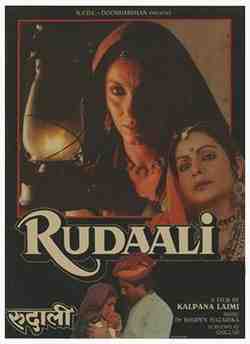
Ramavtar Singh, the ( ) of Barna (a village in the desert), on his death bed, bemoans that none of his relatives would shed tears for him. He calls for a famous rudaali named Bhikni to mourn him after his death. Bhikni stays with the widow Shanichari, who lives in the Thakur’s village. As their friendship grows, Shanichari tells Bhikni her life’s story, which is revealed in flashbacks. Shanichari was born on a (Saturday), named after the planet ( ), considered inauspicious in Hindu astrology. Shanichari is blamed by the villagers for everything bad that happens around her – from her father’s death, to her mother Peewli’s running off to join a theatre troupe. While still young, Shanichari is married off to Ganju, a drunkard. Her son, Budhua, whom she loves very much, likes to roam around aimlessly, just like Peewli did. Meanwhile, the Thakur’s son Lakshman Singh tells her he likes her and hires her as a maid to his wife. In his , Lakshman tries to get Shanichari to assert herself against social customs and encourages her to “look up” into his eyes when speaking to him. One night, after Shanichari sings at the , he gifts her a house of her own, along with two acres of land. Ganju dies from cholera at a village fair. After curses and threats from the village pundit for not observing the prescribed customs, she takes a loan of 50 rupees to perform the rituals from Ramavatar Singh and becomes a bonded labourer under him. Some years later, a grown up Budhua brings home Mungri, a prostitute, as his wife. Shanichari attempts to throw her out but relents on learning that she is pregnant with his child. But the snide remarks of the village pundit and shop-owners fuels conflict between the two women and in a fit of rage after a fight, Mungri the child. Budhua leaves home. Shanichari tells Bhikni that none of these bereavements brought her to tears. One night, Bhikni is called to the neighbouring village by a person named Bhishamdata. Ramavatar Singh dies a few hours later. Shanichari goes to bid farewell to Lakshman Singh, who has plans to leave the village. A messenger brings the news of Bhikni’s death from the plague and tells Shanichari that Bhikni was her mother, Peewli. Shanichari then begins to weep profusely, and takes over as the new rudaali, crying at the Thakur’s funeral. The film was produced by media mogul Mr. R.V.Pandit, who was also at the time the owner of famous publication house Business Press and also owner of famous magazines like Gladrags. The film is based on Mahashweta Devi’s 1979 short story from the book . According to author Priya Kapoor, Lajmi’s casting of Kapadia, a popular film star, was a strategic choice to cater for an audience not normally drawn to feminist, experimental films like . Raakhee was cast in the role of Bhikni. was cast in the film in one of his final roles, and the film, which released after his death, was dedicated to him in the opening credits. The film was produced by the in a process that made Lajmi proclaim she would never again make a film with them. Lajmi said that Kapadia felt exhausted after filming ended. In an attempt to enhance the film’s visual appeal, Lajmi chose to change the setting of the story from Bengal to Rajasthan, where she planned to make use of the desertscape and the grand (mansions). The film was mostly shot on location in the village of Barna, located 40 km from the region of in western Rajasthan, as well as , Khuri desert, and Ruins. The film’s text was spoken in a West Indian dialect, though it was mildly polished for reasons of accessibility to the wider, urban viewers. The film has music by folk musician . The soundtrack album released on 18 June 1993 to great success. wrote, ” is the first genuine crossover album to have negotiated the leap from art to mart, via the listeners’ heart. The song “Dil Hoom Hoom Kare” is based on a previous composition by Hazarika which was used a few decades before in the Assmese film (1964) in a song called “Buku Ham Ham Kore”. Gulzar, who authored the lyrics for , was fond of the Assamese phrase “Ham Ham”, used to denote beating of the heart in excitement, and insisted on using it in the Hindi song instead of the regular Hindi alternative “Dhak Dhak”. All lyrics are written by ; all music is composed by Bhupen Hazarika. The film explores themes of , , , and poverty, all portrayed through the and socio-economic marginalisation of poor villagers. Film critic says the film “placed the issue of gender and patriarchy in the broader context of class and caste divides”. described it as “a film that wishes to evoke ethos”. Radha Subramanyam wrote that the film “explores the many levels of oppression to which the lower-caste, impoverished female is subject”. She notes the film’s combinatory style as it “draws on the two strains of filmmaking extant in India; it combines the social concerns of the ‘art’ cinema with elements of the mass appeal of Bombay films”. In the book , Priya Kapoor calls it “a feminist treatise on solidarity against caste ostracization and the plight of the subaltern woman at the hands of landowning classes”. She further argued that the film came at a time when “caste and class politics have seen a disturbing resurgence in Indian politics and civilian life”. In another book, , Kapoor wrote that ” offers a chance to examine a rural community, colonial and feudal, bound by its caste location”. The film’s script had several diversions from the original story by Devi, including its setting and the focus of the story on the individual story, as well as the romantic tension between Shanichari and the landlord, an original addition to the film. argues that the film is so distant from its original source that those who have read it might be disappointed by the film. She added that those unfamiliar with Devi or the original story might watch independently of its literary source. According to Chatterji, the film romanticises the tragic story of Sachichari. Scholar Tutun Mukherjee wrote of the attraction that develops between Shanichari and the local landlord played by Raj Babbar and posited that given the cultural and social setting of the film, it could only take one form: “It is obvious to both that despite the romance, no relationship other than the exploitative one of the rich over poor and of man over woman can ever be allowed to develop between them.” The character of Shanichari has been discussed by several writers. Author Chandra Bhushan wrote, “Shanichari is dry like a desert but even she has a flavour, affection and audacity and courage to reject the enticement of Zamindar (the landlord).” According to the book , Shanichari is described as “highly vulnerable to all sorts of oppressions. She resists many of them, but succumbs to the dominant discourses”. Reetamoni Das and Debarshi Prasad Nath, film scholars, describe Shanichari as one woman who manages to survive through her harsh realities despite the absence of a man through most of her life. They further describe her as a woman who “writes her own history” as she “neither conforms to the societal constructions of the gender nor the hierarchical communal life”. In the view of Shreerekha Subramanian, the character of Shanichari is an embodiment of the Hindu goddess or her mother who suffer at the hands of men. The portrayal of the women of the higher caste has been discussed by Das and Nath, who claim that in Devi’s story they are very much similar to their privileged male counterparts in terms of “their vanity, sham and upholding their class status”, while in the film, their luxurious lifestyle and high socio-economic status notwithstanding, they are still lesser than the men in their environment and in this sense these women are not more privileged than women like Shanichari. Moreover, the authors note the film’s atypical portrayal of women through Shanichari’s inability to cry, positioning the film as an “antithesis to the popular belief that a woman is a storehouse for tears”. Pillai Tripthi took note of the film’s adoption into the Bollywood format “by turning the public mourning rituals into mellifluous musical performances”. Tripthi made comparisons between and , drawing an analogy between and with Shanichari and Bhikni. was popular with critics and the moviegoing public. The film’s at the box office was attributed by author to its “ambivalent self-positioning” between mainstream and art cinema. According to Chakravarty, the lack of commercial success attained by India’s alternative cinema had been due to its “shunning of the melodramatic elements of songs and emotionality, its gritty social realism”, which embraced altogether. from noted Kapadia’s performance in this film relies on both her prior experience of mainstream cinema conventions as well as her acting prowess which allows her to create a real person, believing these two elements help her make Shanichari “both larger than life and believable”. Dasgupta took note of the story and Lajmi’s direction as having contributed to this and added, “Together, director and actress succeed in making a mix of melodrama and realism that works”. He wrote of Lajmi that “Here in the deserts of Rajasthan with the muted colours of nature and the brilliance of the costumes, she is in her element.” He concluded, “To repeat s razor’s edge walk between realism and melodrama may not be easy.” Film scholar Tutun Mukherjee described as “cinematically appealing and spectacular woman-oriented Hindi film” and praised its quality and production values to be “superior to the usual run-of-mill Hindi formula films”. Foreign reviewers were similarly appreciative of . J. R. Jones of wrote that Kapadia “acquits herself well as the determined widow”. Ernest Dempsey reviewed the film for the book “Recovering the Self: A Journal of Hope and Healing”: “Rudaali is a must see for its realism, gripping performances (especially by Dimple Kapadia), and brilliant treatment of an unusual subject with deep psychological implications.” The Indologist described the film as “uncommon and arresting”, noted its “authentic regional costumes and props, somewhat less authentic (but quite haunting) music, and two famous female stars”. He appreciated both Raakhee and Kapadia for their performances but praised Kapadia in particular for her “dignity and conviction, as well as her effective body language and gestures, lift her character far beyond bathos.” In a retrospective review, written for the book (2020), expressed mixed feelings for the film. She said that despite its artistic aspiration, the film ends up being “a brazen, commercial film spilling over with the commercial ingredients of big stars, wonderful music, hummable songs, excellent production values, and picturesque landscapes.” She noted that Lajmi invested the film with glamour and lavishness that was needed by the original story, and noted that while as an adaptation of Devi’s story it is less successful, saying, “Lajmi loses out to the lavish mounting and the musical gimmicks of commercial cinema. She ends up denying the film the identity it deserves.” In spite of this, Chatterji noted that if watched without the original story in mind, is “entertaining and educative” in and of itself as it informs “the Indian audience about the oppression of a people it hardly knows about”. The film is one of several films based on Devi’s works. In his book , picked the film as one of the 200 best Hindi films ever made and wrote: ” takes us into the life of a professional mourner, played to memorable heights of sad and dry-eyed poignancy by Dimple Kapadia, who is Sanicheri, the mourner who can’t weep for herself”. M. L. Dhawan included the film in his list of best films of that year, describing it as a “captivating melodrama”, commending Kapadia’s “mesmerising performance” and cocluding, “Folk tunes and songs of Rajasthan blended with Bhupen Hazarika’s music against the backdrop of Rajasthani landscapes to add to grandeur to the film.” wrote, “Remembered as much as for its mellifluous music, as for Dimple Kapadia’s National Award-winning performance and its stark realism, again broke new ground in terms of its subject – the lives of professional mourners.” Film critic Namrata Joshi believes that for Lajmi, is the film “that put the spotlight on her,” arguing it is “perhaps the most persuasive feature film” of her career. In 1994, Sudhir Bose wrote an article for about contemporary women directors and noted Lajmi’s work in the film where Kapadia delivered a “bravura performance”, which, along with Hazarika’s music as well as Amjad Khan’s “riveting cameo” secured the film’s success. The wrote in 2018 in a piece about Lajmi that is particularly noteworthy in her career “as it featured a stellar performance by Dimple Kapadia and is still remembered for its songs and music”. Lajmi’s directorial work has been touted as one of her famous works. Raja Sen included the film in his list of 10 Best Hindi Films by Women Directors. wrote the film remains Lajmi’s best-known film. Kapadia’s performance is considered one of the finest of her career. included her work in the film in its list of “80 Iconic Performances”: “Dimple’s phenomenal talent comes shining forth when you see years of suppressed hurt, anger and a sense of life’s injustice simply flow from Shanichari’s eyes.” Deepa Gahlot wrote for the saying the film starred Kapadia in her finest performance, and included the character of Shanichari in her book of “25 Daring Women of Bollywood”. said Kapadia was her best ever in the role, and similar thoughts were shared by critic Raja Sen. In later years, Kapadia has maintained to have been discontent with parts of her performance and considered the transition her character goes through by the end of the film to be less convincing. The film’s music was highly acclaimed, and Priya Singh wrote that ” s compositions are now part of the canon of world music”. According to , it is this film’s soundtrack which gave Hazarika “a pan-India reach”. In 1999, the film was among those screened at the “Women in Indian Cinema” section at the and the in Washington D.C. According to , the village of Barna where the film was shot, has become a popular tourist destination since the film’s release, with visitors frequenting the place due to its association with the film for years after. was to the for the for category. It was screened at the International Film Festival of India, 1993, and the San Diego Film Festival, 1994. At the , the film won three awards, including for Kapadia’s performance, cited as a “compelling interpretation of the tribulations of a lonely woman ravaged by a cruel society”. ‘s production design won him the award for his “realistic recreation of the desert scape, with its requisite architectural structures, both opulent and humble”, while and Mala Dey were named the for the “authentic designs they created to blend with the desert backdrop of Rajasthan. Kapadia won a and was awarded Best Actress several honours at film festivals including the 38th and the 8th . At the , was nominated for three awards. Among other awards, the film earned Lajmi accolades for direction at the V. Shantaram Awards and the All-India Critics Association (AICA) Awards. In the latter function, was named the Best Hindi Film of the year.
Details
Reviews
There are no reviews yet. Be the first one to write one.