
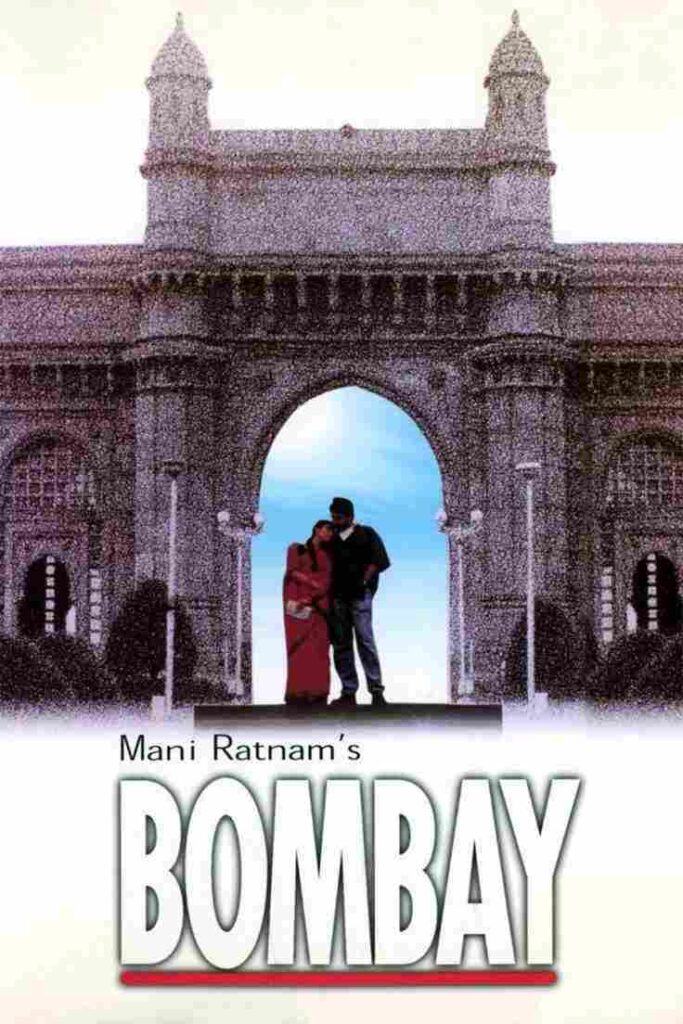
Movie Info
ℹ️ More Movie InfoTrailer
Soundtrack
| Song Name | Singer(s) | Lyricist | Video |
|---|---|---|---|
| Uyire Uyire | A.R. Rahman | Vairamuthu | |
| Poovukkenna Poottu | Neol James, Malgudi Subha, Anupama, A.R. Rahman and G.V. Prakash Kumar | Vaali | |
| Malarodu Malaringu | Vairamuthu | ||
| Kannalane Enadhu Kannai | A.R. Rahman and K.S.Chithra | Vairamuthu | |
| Kuchi Kuchi Rakkamma | Hariharan, Swarnalatha, G.V. Prakash Kumar and Sharadha | Vairamuthu | |
| Andha Arabickadaloram | A. R. Rahman, Suresh Peters and Swarnalatha | Vairamuthu |
Storyline
Shekhar is the son of an orthodox Narayana Pillai living in a coastal village in . A journalism student studying in , Shekhar visits home to be with his family. On one of his return trips, he notices Shaila Banu, a schoolgirl in the village and falls in love with her. She happens to be his sister’s friend. Initially shy, Shaila seeks to distance herself from Shekhar, but after frequent run-ins, and days of pursuit, Shaila begins to like Shekhar. Eventually, they both fall in love. Shekhar meets Shaila’s father, Basheer, and says he wants to marry Shaila. Basheer refuses, citing differences in religions. Shekhar reveals his interest to his father, who becomes angry, meets Basheer, and gets into an abusive argument with him. Upset with rejection from both families, Shekhar returns to Bombay. Through a friend of hers, he sends Shaila a letter and a ticket for her to travel to Bombay. However, she is undecided; Basheer learns of her regular letters from Shekhar and plans to get her married in order to stop this relationship from growing further. Left with no choice, Shaila leaves the village with the ticket Shekhar sent and reaches Bombay. Shekhar and Shaila marry and lead a happy life. In a year, Shaila conceives and delivers twin boys who are named Kabir Narayan and Kamal Basheer. The twins are raised in both religions. Shekhar continues to work as a journalist, while Shaila takes care of her home and children. In six years, Shekhar and Shaila firmly settle down. When the is on 6 December 1992, break out in Bombay. Kabir and Kamal, who had gone to buy groceries, get caught in the riots; eventually, Shekhar and Shaila save them and reach home safely. Narayana Pillai, who receives the news of the riots, rushes to Bombay to meet his son and his family. He reconciles with his son and everyone is happy with his arrival, and he stays with them. Soon, Basheer also comes with his wife and all of them live together happily for a few days. Both Pillai and Basheer are happy with their grandchildren; they try to get both into their religions and wish to be with them. On 5 January 1993, when two murders are propagated as communal killings, another riot breaks out in Bombay, raising tensions between religious communities. Hindus and Muslims clash in the streets, resulting in hundreds of deaths on both sides. During the conflict, arsonists set fire to the apartment where Shekhar lives with his family. Shekhar tries to evacuate everyone, but Narayana Pillai, Basheer and his wife fail to escape in time and are killed in an explosion. In the confusion of the panicking crowds, Kamal and Kabir are separated from their parents. Kamal is saved by a transgender woman who cares for him and protects him, while Kabir searches aimlessly for his brother. Shekhar and Shaila begin to search for them, and they go through several tense moments, as they check the morgues and hospitals for their children. Shekhar grows emotional and participates in the movement to stop the riots with other moderate religious leaders, ultimately succeeding. When the riots end, Shaila and Shekhar are reunited with their children tearfully as the people on the streets join hands, regardless of age or religion. Additionally, and appear in the ” “. During the recording of the background score of ‘s (1993), the broke out. Mani Ratnam planned on making a film in about a boy who gets lost in the riots, and requested to write the script. This was supposed to be Mani Ratnam’s second Malayalam film after (1985). But since the idea did not materialise, he decided to make it in as the film that would later be titled . According to Ratnam, was not originally planned as a political film: “It was a phase India was going through and these things affected me and found their way into my work.” was considered for the female lead, but she opted out due to unavailability of dates, with the production schedules clashing with her Miss World pageant, a title she went on to win. Mani Ratnam held a photoshoot for the film with and , but eventually excluded Vikram as he was unwilling to shave his beard and long hair that he had grown for the production of another film during the period, (1994); the role went to . Koirala has stated that, though some people advised her against accepting the project since she had to play a mother, she did not listen as there were others who said “it’ll be foolish to refuse a Mani Ratnam film”. Koirala’s voice was dubbed by . Nassar, a Muslim in real life, was cast as the father of Swamy’s character (a Hindu) while Kitty, a Hindu in real life, was cast as the father of Koirala’s character (a Muslim). Ratnam deliberately cast them in those roles as a statement. Twins Harsha and Hriday were chosen to play the protagonists’ twin sons, from over 70 twins that the director saw but was not impressed. remains Hriday’s only release. When Ratnam approached cinematographer to shoot , he described it as a film about the riots and said that he (Menon) needed to “(make what came before) the riots as beautiful as possible”. So, Menon suggested shooting in the rains to achieve the effect. They shot the interiors of homes in in Tamil Nadu and the exteriors were shot in , and in Kerala. The song “Kannalane” was shot at , and “Uyire” was shot at . The demolition of the Babri Masjid was shown onscreen through newspaper headlines and photographs, as the did not want the makers to show the actual destruction. Mani Ratnam described as “a positive film about communal harmony”. He said the Bombay riots were not the main focus of the film, but “a helpless, innocent man caught up in violence not of his own making.” The film is the second installment in Ratnam’s trilogy of films that depict human relationships against a background of Indian politics, including (1992) and (1998). compared it to the theme of the 1990 movie . The soundtrack album for was composed by , in his third collaboration with Mani Ratnam after and . The lyrics for the Tamil version were written by , except “Humma Humma” & Halla Gulla” written by . The soundtrack of the film became one of the best-selling Indian music albums of all time, with sales of 15 million units. The soundtrack was included in s “1000 Albums to Hear Before You Die” list, and the song “Kannalanae” sung by was included in their “1000 Songs Everyone Must Hear” list. “Bombay Theme” has appeared in various international films and music compilations, while the songs “Kannalanae” and “Bombay Theme” have been sampled by various international artists. was released on 10 March 1995. The -dubbed version was released on the same day. It was previously scheduled to release in January 1995, during . The film caused considerable controversy upon release in India and abroad for its depiction of inter-religious relations between a Muslim woman and a Hindu man. The film was banned in Singapore and Malaysia upon release. Two homemade bombs were thrown at the house of Mani Ratnam, who had to be hospitalised with shrapnel injuries. The Hindi dubbed version of the film grossed (equivalent to 830Â million or US$9.9Â million in 2023), as reported by , making it one of the year’s ten highest-grossing Hindi films. , in a review dated 19 March 1995, rated the film 53 out of 100. Anand Kannan, writing for , said, “I wouldn’t call this the best of Mani Ratnam […] But good acting, a socially conscious theme and a quick pace make the movie well worth watching.” In 1996, American critic rated the film 3.5 out of 4 and said, “Largely because of their limited North American appeal and dubious quality, Indian movies are routinely ignored by distributors […] Occasionally, however, a worthwhile picture causes enough people to take notice that it becomes a favorite on the international film festival circuit. One such movie is , the fourteenth feature from celebrated director Mani Rathnam.” He concluded, “Director Rathnam has shown great courage in making this picture (bombs were thrown at his house after it opened in India), which speaks with a voice that many will not wish to hear. recalls how forceful a motion picture can be.” R. P. R. of wrote that with far cry from average cinema, this film raises a thousand questions about social morality, not just Mani Ratnam; it has given every Indian a chance to be proud.
Details
Reviews
There are no reviews yet. Be the first one to write one.